Your shopping cart is empty!
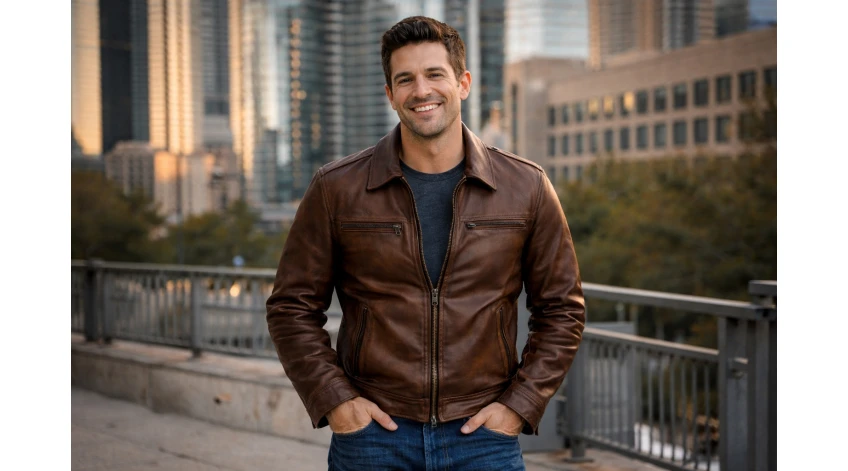

You’ve seen it happen.
One guy walks into the room wearing a leather jacket and nobody notices.
Another guy walks in wearing what looks like the same jacket — and suddenly people look twice.
It’s not the price.
It’s not the brand.
It’s not even the color.
It’s the fit.
A leather jacket is one of the few clothes that can either make you look sharper instantly… or make you look like you borrowed it from someone else. The difference between “nice jacket” and “damn, that fits perfect” comes down to a few small measurements most people never pay attention to — until they finally wear the
You wear a leather jacket in the mirror.
It looks good… but something feels off.
Too tight when you move.
Too loose at the waist.
Sleeves slightly long.
Most people assume they chose the wrong style.
They didn’t.
They chose the wrong fit.
A real leather jacket never looks impressive because it’s expensive.
It looks impressive because it fits your body correctly.
This guide shows exactly how a leather jacket should fit — shoulder to waist — so it looks sharp on day one and even better after months of wear.
A leather jacket should fit snug but not restrictive. The shoulders must align perfectly, sleeves should end at the wrist bone, and the waist should lightly taper. Real leather stretches slightly over time, so a slightly firm fit at first becomes the ideal fit after wear.
This only works with genuine leather — synthetic materials don’t adapt the same way.
Link → Real vs Fake Leather
Leather behaves differently from fabric.
Cotton adjusts instantly.
Leather adjusts gradually.
Real leather molds using body heat and movement.
That means the first fit decides the final fit.
Loose today → baggy forever
Correct today → perfect later
Think of leather as a material learning your shape.
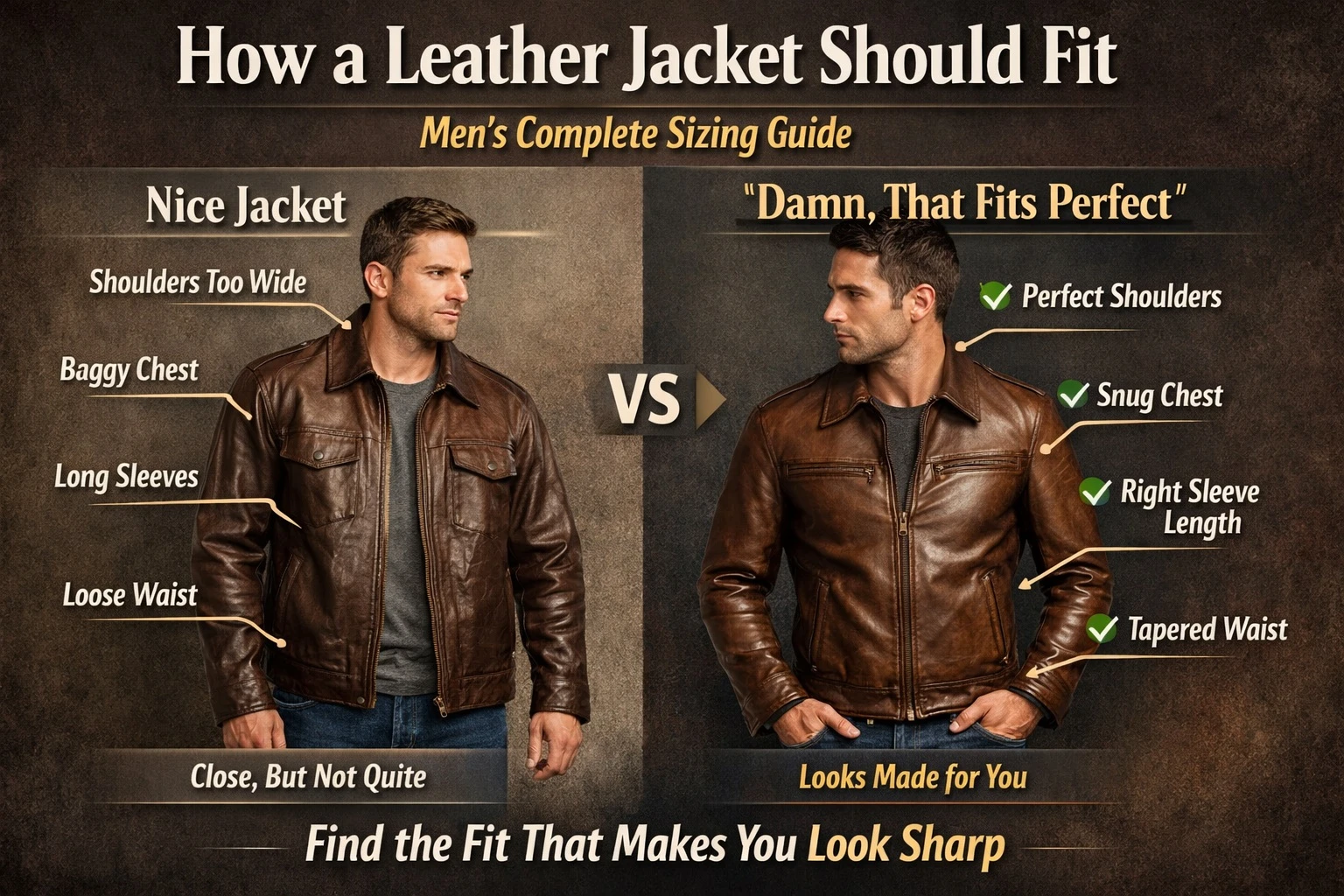
The shoulder seam must end exactly where your shoulder ends.
Not above
Not below
If shoulders are wrong, the jacket will never look right.
Test:
Raise your arms forward.
No pulling = correct
Drooping = too big
Leather stretches in body areas — not shoulders.
Zip the jacket fully.
You should feel light pressure, not tightness.
No horizontal pulling lines across the chest.
You should be able to wear:
T-shirt or thin sweater
Not designed for:
Heavy hoodie layering
Leather jackets are structured layers, not winter parkas.
High armholes create a premium look.
Test:
Raise arms upward.
If whole jacket lifts → poor fit
If only sleeves move → proper tailoring
This single detail separates tailored jackets from average ones.
Sleeves should end at your wrist bone.
Not covering palm
Not showing forearm
When arms bend, sleeves shorten slightly — this is correct.
The waist defines silhouette.
You want a gentle taper — not tight compression.
From side view:
Chest → slight inward → hips
Straight box shape = oversized fit.
Hug yourself.
Very tight → too small
Loose folds → too big
Slight resistance → perfect
Leather relaxes after 5–10 wears.
First wear: structured
After a week: flexible
After a month: personalized
After a year: signature fit
Good leather remembers posture.
That’s why slightly snug initially is correct.
Buying hoodie size
Oversized shoulders
Sleeves covering hands
Expecting instant softness
Judging fit while sitting
Choosing comfort over structure
Most “leather doesn’t suit me” problems come from these.
Related posts :
How Should a Leather Jacket Fit for Women?
How Tight Should A Leather Jacket Be?
How Should a Leather Bomber Jacket Fit Women?
Try jackets in afternoon (body expanded naturally)
Move your arms before deciding
Judge fit standing, not sitting
New leather should feel structured
Perfect fit happens after a few wears
Professionals never buy leather loose hoping it will look tailored later.
Yes. Slight firmness is correct because leather stretches slightly with wear.
No. About 5–10% only in movement areas.
Minor adjustments yes, shoulders no.
Usually no. Leather jackets are mid-layers.
Better pattern cutting and higher armhole design.
Two jackets can look identical on day one…
but different after a month.
Lower-grade leather stays stiff or collapses into wrinkles.
Better leather relaxes and follows your posture.
This is why some jackets improve with age
while others only wear out.
Fit is not only tailoring.
Fit is also material memory.
A great-looking jacket comes from three elements working together:
Accurate shoulder pattern
High armhole construction
Leather that molds instead of sagging
When missing → wearer adjusts the jacket
When correct → jacket adjusts to the wearer
That’s why good leather rarely feels perfect instantly — it becomes perfect after wear.
Before sizing, confirm the jacket is actually real leather.
Link → Real vs Fake Leather Jacket
Most sizing frustration doesn’t happen because someone chose the wrong size.
It happens because the jacket was designed for mass averages instead of real body proportions.
A properly structured genuine leather jacket removes most fit issues before break-in even begins.
Instead of pulling sleeves
Instead of adjusting shoulders
Instead of guessing sizes
You begin with a natural body shape — and the leather finishes the rest over time.
You shouldn’t adapt to a leather jacket.
A leather jacket should adapt to you.
A leather jacket should not feel instantly broken-in.
It should feel almost right — then become perfect.
Correct shoulders
Slightly snug chest
Clean sleeve length
Tapered waist
And leather that learns your movement
Follow these rules and your jacket won’t just fit better —
it will start to feel like it belongs to you.
